NEWS
Millionaire US big game hunter, 75, is trampled to death by five elephants while hunting antelope in central Africa

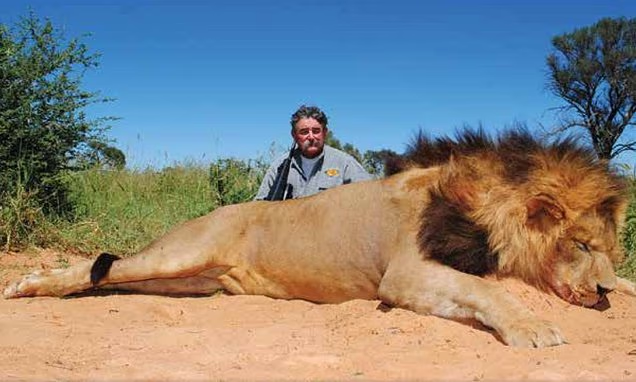
In a shocking and sobering turn of events, a 75-year-old American millionaire and seasoned big-game hunter lost his life in the dense forests of Central Africa after being trampled by a herd of elephants. What began as a routine hunting expedition ended in a brutal reminder of nature’s unpredictability—and its power.
The hunter, identified as Ernie Dosio, had traveled deep into the rainforest of Gabon in pursuit of a rare antelope species known as the yellow-backed duiker. Accompanied by a professional guide, Dosio was navigating thick vegetation when they unknowingly came into close proximity with a small group of elephants—five females and a calf.
What happened next unfolded in seconds.
Startled and feeling threatened, the elephants charged. In the wild, especially among elephants, such reactions are not acts of senseless aggression but instinctive defense—particularly when young calves are involved. Female elephants are fiercely protective, and any perceived threat can trigger an immediate and overwhelming response.
Dosio did not survive the encounter. His guide, though seriously injured, managed to escape.
This tragic incident underscores a reality often overlooked in the romanticized world of big-game hunting: the wilderness is not a controlled environment. No level of experience, wealth, or preparation can fully eliminate risk when dealing with wild animals in their natural habitat.
For decades, big-game hunting has sparked intense global debate. Supporters argue that regulated hunting contributes to conservation efforts and local economies, while critics question its ethics and necessity in a modern world increasingly focused on wildlife protection. Incidents like this add another layer to that debate—highlighting not just moral concerns, but also the very real dangers involved.
Gabon, where the incident occurred, is home to one of the largest populations of forest elephants in the world. These animals, though less visible than their savannah counterparts, are known for their strength, intelligence, and sensitivity to disturbance—especially in dense forest environments where visibility is limited and encounters can happen without warning.
In the end, this is more than just a story about a hunting trip gone wrong. It is a stark reminder of the delicate balance between humans and nature. When that balance is disrupted—even unintentionally—the consequences can be swift and unforgiving.
Nature does not operate by human rules. And sometimes, it answers intrusion with force.
As conversations continue around conservation, hunting, and human interaction with wildlife, one thing remains clear: respect for nature is not optional—it is essential.


The Queen Is Back: Serena Williams Returns to Tennis at 44

Barack Obama Shares Heartwarming Mother’s Day Tribute to Michelle Obama with an amazing family picture
Barack Obama Shares Heartwarming Mother’s Day Tribute to Michelle Obama with an amazing family picture

Who is Cole Tomas Allen and charges he faces over White House Correspondents’ Dinner shooting

Millionaire US big game hunter, 75, is trampled to death by five elephants while hunting antelope in central Africa

Candace Owens fires back at Donald Trump: “Time to Send Him to an Old People’s Home”

VIRAL: BREAKS THE INTERNET WITH DARING FASHION MOMENT — FANS CAN’T STOP TALKING!

Secret double life of Kristi Noem’s cross-dressing husband Bryon: The pouting ‘busty bimbo’ photos and trove of explicit messages

Serena Williams Shines in Heartwarming Family Moments with Venus and Her Loved Ones

“First Lady Melania Trump Calls Jimmy Kimmel ‘Hateful and Violent,’ Demands ABC Fire Him”

Internet Buzz: 10 Private Photos of Serena Williams Allegedly Leaked Online, Click here to see more pictures
