NEWS
Revealed: The message Norwegian PM sent Trump that sparked president’s outburst saying Nobel Peace Prize snub justified Greenland land-grab

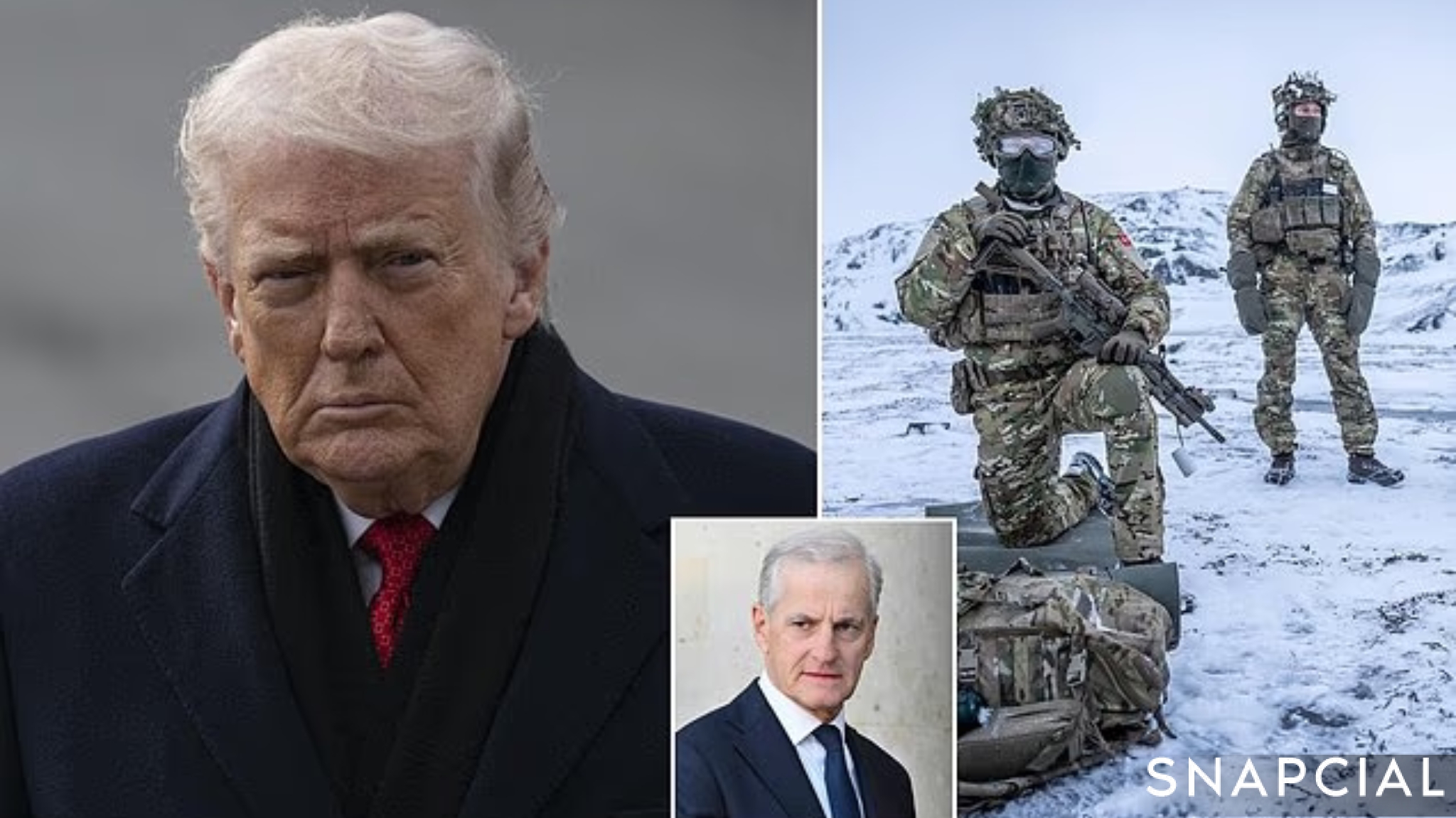
A diplomatic message meant to draw a clear moral line has instead ignited a political firestorm stretching from Oslo to Washington — and all the way to the Arctic.
According to sources familiar with the exchange, a private message sent by Norway’s Prime Minister to former U.S. President Donald Trump has now been identified as the spark behind Trump’s explosive outburst over the Nobel Peace Prize and his renewed hardline rhetoric on Greenland.
A Message That Hit a Nerve
The communication, described as blunt but diplomatic, reportedly reminded Trump that the Nobel Peace Prize is awarded based on concrete contributions to peace, multilateral cooperation, and respect for international norms — not geopolitical leverage or military pressure.
The message is said to have emphasized three points:
- That peace cannot be coerced
- That territorial acquisition contradicts the spirit of international law
- And that the Nobel Committee remains independent of political pressure
While the wording was measured, insiders say the implication was unmistakable: Trump’s confrontational foreign policy approach had placed him outside the values the prize represents.
Trump’s Explosive Response
Trump’s reaction was swift and furious.
In remarks that stunned allies and critics alike, he lashed out at Norway and the Nobel Committee, declaring that he was no longer “obliged to think purely of peace” and that the repeated Nobel snub justified him focusing solely on what he called “America’s interests — without apology.”
Most controversially, Trump linked the snub directly to Greenland, reviving the idea that U.S. strategic dominance — not diplomatic approval — should determine global outcomes.
To Trump’s supporters, the outburst was classic defiance. To critics, it was a chilling signal that bruised ego could shape foreign policy rhetoric.
Greenland: Symbol or Strategy?
Greenland has long held strategic importance due to its location, resources, and military relevance. But Trump’s framing of Greenland as a prize withheld because of moral criticism has raised alarms.
Foreign policy analysts warn that tying territorial ambition to personal grievance sets a dangerous precedent.
“This stops being about strategy and starts becoming about retaliation,” one European diplomat noted. “That’s when allies get nervous.”
Denmark, which governs Greenland, has maintained firm opposition to any notion of U.S. acquisition, while Greenlandic leaders themselves have repeatedly insisted the island is not for sale — diplomatically or otherwise.
Norway Pushes Back Quietly
Norwegian officials have declined to publicly comment on the content of the message, but insiders suggest Oslo was taken aback by the intensity of Trump’s reaction.
Norway’s position remains unchanged: the Nobel Peace Prize is not a bargaining chip, nor is it a reward for power politics. The government is reportedly concerned that Trump’s comments risk undermining the credibility of international peace institutions.
A Deeper Divide Exposed
Beyond the headlines, this episode reveals a deeper clash of worldviews.
On one side is a rules-based international order built on diplomacy, restraint, and multilateral cooperation. On the other is a transactional approach to power — one that sees recognition as something owed, not earned.
Trump’s fury over the Nobel snub may resonate with supporters who see global institutions as elitist or biased. But to many observers, the episode underscores why those institutions remain wary.
Conclusion: Ego, Power, and the Cost of Recognition
What began as a private diplomatic message has now exploded into a public controversy that blends ego, geopolitics, and symbolism.
Whether Trump’s remarks were strategic posturing or emotional retaliation, the fallout is real. Allies are watching. Rivals are listening. And the world is once again reminded that in global politics, words — even private ones — can redraw fault lines overnight.
One thing is certain: the Nobel Peace Prize, once a symbol of unity, has become yet another battlefield in an increasingly polarized world.


CELEBRITYKanye West’s wife Bianca Censori shocks once again as she goes braless in a sheer thong leotard as the couple step out in Switzerland…Published 1 day ago on June 19, 2026By Gisela Osbeck

BREAKING: Taylor Swift’s Divorced Parents, Andrea and Scott Swift, Remarry in a Private, Elegant Wedding — Travis Kelce Comforts Emotional Taylor as She Opens Up About the Pain She’s Carried Since Their Split… But Fans Are Left Stunned When She Announces What Many Have Suspected All Along: She’s Expecting… See More Photos

Travis Kelce AND Taylor Swift ARE MARRIED! Lavish Wedding Ceremony Captivates Fans and A-Listers Worldwide as the Couple Finally Ties the Knot and Lady Gaga Completely Stole the Spotlight with a Jaw-Dropping Performance That Brought the House Down

Taylor Swift Invites Fiancé Travis Kelce to the Stage During Her Surprise Performance of love story at the Tight End University concert– But She Didn’t Know Travis Would Shockingly Announce What Millions of Fans Have Been Saying All Along… “Taylor and I Are Not…”

A Move No One Saw Coming: Jason Kelce and Travis Kelce have quietly taken an extraordinary step. The NFL brothers recently purchased a modest home in Cleveland Heights, Ohio — near where they grew up — a place that once symbolized their humble beginnings during the earliest days of their football dreams. Now, instead of keeping it as a private retreat, they are transforming the property into CASA CONEJO.

BREAKING: Jennifer Lopez Is Engaged Again… and Her New Fiancé Is a Total Curveball! JLo’s Surprise Proposal Goes Viral—Fans Can’t Handle Who She’s Marrying Now and you better sit down, because you might recognize him!

Travis Kelce Caught Kissing Mystery Woman at His Bachelor Party at Bird Street — The Identity of the Woman Has Been Confirmed as Taylor’s Best…

Travis Kelce and Taylor Swift Join Knicks Victory Parade Bus, Celebrating Championship Glory Alongside Timothée Chalamet

New York Knicks Say They’ll be Declining White House Invitation from Donald Trump After NBA Championship Victory, Announce Massive Post-Parade Celebration Headlined by Taylor Swift

JUST IN: 20 Minutes Ago in Philadelphia, Pennsylvania, Jason Kelce Was Officially Confirmed…

Jason Kelce Spotted Enjoying Casual Lunch with Future Sister-in-Law Taylor Swift and Fiancé Travis Kelce at Budget-Friendly Marina del Rey Favorite Killer Shrimp
