NEWS
TRUMP slams Norway: “You refused to give me the Noble Peace Price, I am no longer Obliged to think about Peace, I’m done thinking about Peace, I am instead now focusing on what is best for America.

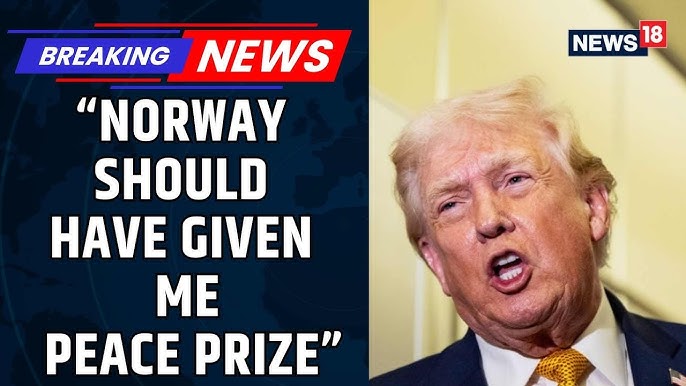
Former U.S. President Donald Trump has ignited fresh international controversy after delivering a blistering message aimed squarely at Norway, the country responsible for awarding the Nobel Peace Prize. In remarks that are already reverberating across global political circles, Trump declared that he is no longer “obliged to think purely of peace,” signaling a sharp rhetorical shift that critics say reflects a more confrontational worldview.
A Break From Diplomatic Language
Trump’s comments were striking not only for their tone but for what they implied. He suggested that repeated snubs from the Nobel Peace Prize committee had reinforced his belief that global institutions neither recognize nor reward what he views as America-first leadership.
“You refuse to give me the Nobel Peace Prize,” Trump said, “and now I’m focused on what’s best for the United States instead.”
The statement appeared to dismiss the idea that American foreign policy should be guided by international approval or symbolic honors, replacing it with a blunt emphasis on national interest over global consensus.
Norway in the Crosshairs
Although the Nobel Peace Prize is awarded by an independent committee appointed by Norway’s parliament—not the Norwegian government itself—Trump’s remarks did not make such distinctions. Instead, Norway became a stand-in for what he has long criticized as a global elite that, in his view, undermines strong nationalist leadership.
Political observers note that Trump has frequently pointed to his role in diplomatic negotiations and regional de-escalations as justification for why he believes he deserved the prize. The repeated failure to receive it has clearly become a symbolic grievance, now being used to underscore a broader rejection of multilateral expectations.
“Peace Isn’t Free,” Trump Suggests
By saying he is no longer obligated to think “purely of peace,” Trump did not explicitly call for war—but the wording was enough to raise alarms. Supporters argue he is simply being realistic, emphasizing strength, leverage, and deterrence rather than idealism. Critics, however, warn that such language risks normalizing aggression and sidelining diplomacy.
To them, the message sounded less like strategic realism and more like resentment dressed up as policy.
Supporters Cheer, Critics Warn
Among Trump’s base, the remarks were met with approval. Many supporters praised him for rejecting what they see as hypocritical international institutions and putting American priorities first—without apology.
Opponents saw something darker: a leader openly dismissing peace as a guiding principle and framing global cooperation as optional, or even foolish, when it doesn’t deliver personal or political validation.
Symbolism Over Substance—or a Real Shift?
Whether Trump’s statement reflects a genuine policy position or simply another provocative soundbite remains unclear. What is certain is that the rhetoric reinforces his long-standing narrative: that America should act independently, decisively, and without regard for global applause.
In one sentence, Trump managed to turn a prestigious peace prize into a symbol of defiance—recasting rejection not as a loss, but as liberation from restraint.
As global tensions continue to rise, the world is left to ask:
Is this just Trump talking tough again—or a preview of a more openly confrontational American posture if power changes hands?


CELEBRITYKanye West’s wife Bianca Censori shocks once again as she goes braless in a sheer thong leotard as the couple step out in Switzerland…Published 1 day ago on June 19, 2026By Gisela Osbeck

BREAKING: Taylor Swift’s Divorced Parents, Andrea and Scott Swift, Remarry in a Private, Elegant Wedding — Travis Kelce Comforts Emotional Taylor as She Opens Up About the Pain She’s Carried Since Their Split… But Fans Are Left Stunned When She Announces What Many Have Suspected All Along: She’s Expecting… See More Photos

Travis Kelce AND Taylor Swift ARE MARRIED! Lavish Wedding Ceremony Captivates Fans and A-Listers Worldwide as the Couple Finally Ties the Knot and Lady Gaga Completely Stole the Spotlight with a Jaw-Dropping Performance That Brought the House Down

Taylor Swift Invites Fiancé Travis Kelce to the Stage During Her Surprise Performance of love story at the Tight End University concert– But She Didn’t Know Travis Would Shockingly Announce What Millions of Fans Have Been Saying All Along… “Taylor and I Are Not…”

A Move No One Saw Coming: Jason Kelce and Travis Kelce have quietly taken an extraordinary step. The NFL brothers recently purchased a modest home in Cleveland Heights, Ohio — near where they grew up — a place that once symbolized their humble beginnings during the earliest days of their football dreams. Now, instead of keeping it as a private retreat, they are transforming the property into CASA CONEJO.

BREAKING: Jennifer Lopez Is Engaged Again… and Her New Fiancé Is a Total Curveball! JLo’s Surprise Proposal Goes Viral—Fans Can’t Handle Who She’s Marrying Now and you better sit down, because you might recognize him!

Travis Kelce Caught Kissing Mystery Woman at His Bachelor Party at Bird Street — The Identity of the Woman Has Been Confirmed as Taylor’s Best…

Travis Kelce and Taylor Swift Join Knicks Victory Parade Bus, Celebrating Championship Glory Alongside Timothée Chalamet

New York Knicks Say They’ll be Declining White House Invitation from Donald Trump After NBA Championship Victory, Announce Massive Post-Parade Celebration Headlined by Taylor Swift

JUST IN: 20 Minutes Ago in Philadelphia, Pennsylvania, Jason Kelce Was Officially Confirmed…

Jason Kelce Spotted Enjoying Casual Lunch with Future Sister-in-Law Taylor Swift and Fiancé Travis Kelce at Budget-Friendly Marina del Rey Favorite Killer Shrimp
