NEWS
War Erupts in the Gulf: Iran Attacks U.S. 5th Fleet in Bahrain After Trump Launches ‘Massive’ Strike on Tehran

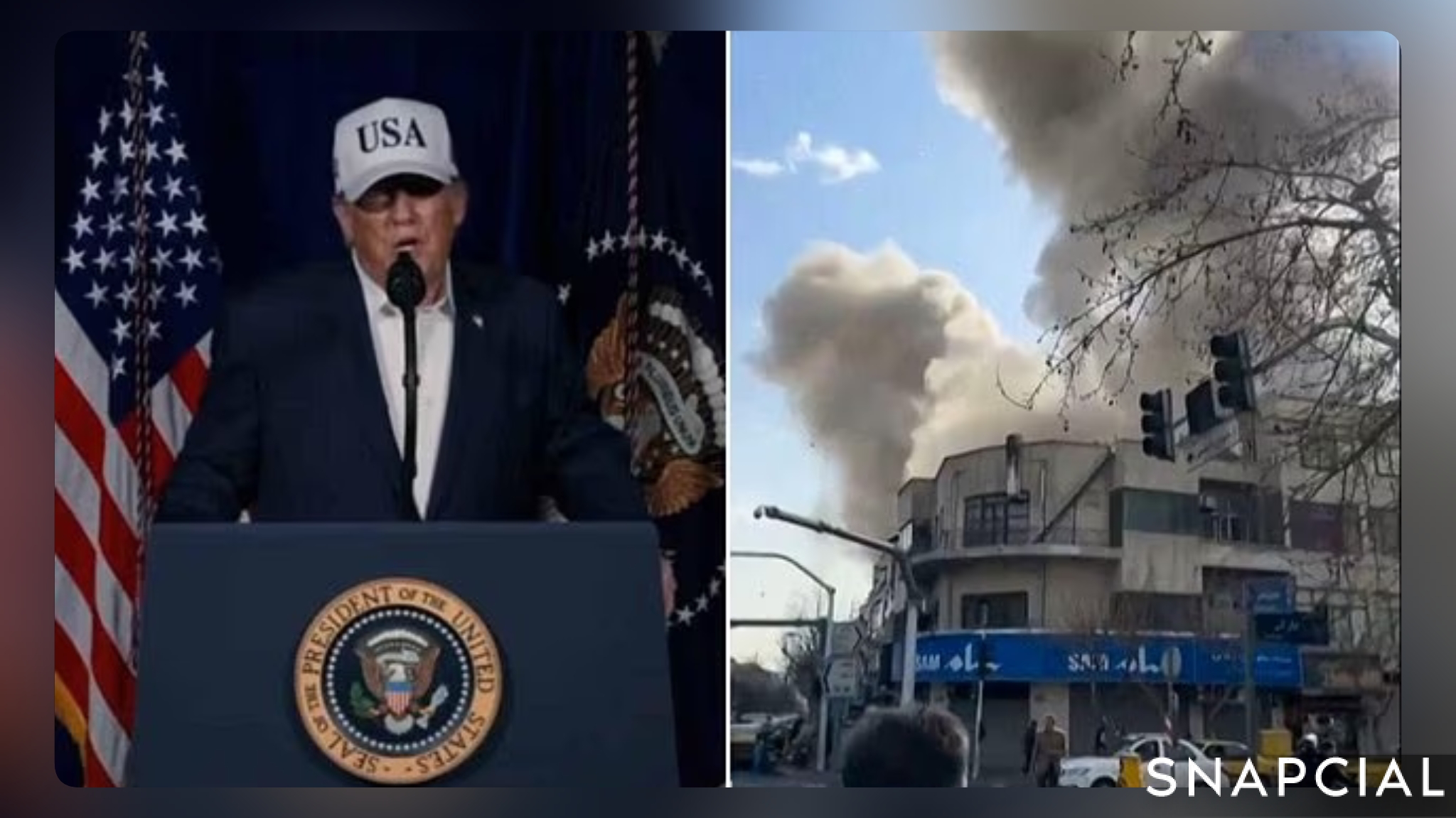
The Middle East has been thrust into one of its most dangerous military confrontations in decades following a dramatic escalation between the United States, Israel, and Iran.
Tensions exploded after authorized what he described as a “massive” and ongoing joint U.S.–Israeli military assault on Iran, aimed at crippling the country’s nuclear and missile infrastructure. Within hours, Iran retaliated — striking American military assets in the Gulf, including the headquarters of the in .
Trump Declares ‘Major Combat Operations’ Underway
In a forceful address, President Trump confirmed that the United States had begun major combat operations against Iran, describing the action as necessary to prevent Tehran from acquiring nuclear weapons.
According to U.S. officials, the coordinated strikes — carried out alongside — targeted key military installations, missile facilities, and sensitive sites connected to Iran’s nuclear program in and around . Explosions were reported across several Iranian cities as air defenses attempted to intercept incoming attacks.
Trump warned that the operation would continue until Iran’s nuclear ambitions were “completely neutralized,” signaling a decisive shift away from diplomacy and toward full-scale military confrontation.
Iran Responds: ‘Time to Defend the Homeland’
Iran’s leadership reacted swiftly and defiantly. Senior officials and commanders of the declared that Iran would respond “at a time and place of its choosing,” accusing Washington and Tel Aviv of waging an unprovoked war.
That response came rapidly.
Iran launched a wave of missiles and drones across the Gulf, striking U.S. military positions and allied facilities. The most significant blow was a direct attack on the headquarters of the U.S. Navy’s Fifth Fleet in Bahrain — a strategic nerve center for American naval operations across the Persian Gulf, Red Sea, and parts of the Indian Ocean.
U.S. Fifth Fleet Hit in Bahrain
Bahraini authorities confirmed that missiles struck near the Fifth Fleet command area, triggering air-raid sirens and emergency alerts across the capital, . Smoke was seen rising near the base as emergency services rushed to the scene.
While U.S. officials have not released full details on casualties or damage, the strike represents one of the most direct attacks on American military infrastructure in the region in recent history.
In response, security levels were raised across U.S. bases in the Middle East, and non-essential personnel and military families were authorized to leave Bahrain amid fears of further Iranian retaliation.
Shockwaves Across the Gulf Region
The conflict has sent shockwaves throughout the Gulf:
- Missile defense systems were activated in neighboring states
- Airspace closures and flight diversions disrupted regional travel
- Oil markets reacted nervously amid fears of supply disruptions
- Gulf capitals were placed on high alert for additional strikes
Analysts warn that Iran may continue targeting U.S. assets and allies if the attacks on its territory persist, raising the specter of a prolonged regional war.
World on Edge as Conflict Escalates
Global leaders have urged restraint, warning that the rapidly unfolding conflict could spiral beyond control. However, with both sides showing little willingness to back down, diplomatic efforts appear sidelined as military action dominates the response.
The strike on the U.S. Fifth Fleet marks a dangerous turning point — transforming long-running tensions into open warfare with global consequences.
What Happens Next?
As of now:
- U.S. and Israeli forces continue operations against Iranian targets
- Iran has demonstrated its willingness to strike American bases directly
- The Gulf region remains on edge, bracing for further escalation
What began as an effort to halt Iran’s nuclear program has evolved into a high-stakes confrontation that threatens regional stability, global energy markets, and international security.


Candace Owens fires back at Donald Trump: “Time to Send Him to an Old People’s Home”

VIRAL: BREAKS THE INTERNET WITH DARING FASHION MOMENT — FANS CAN’T STOP TALKING!

Secret double life of Kristi Noem’s cross-dressing husband Bryon: The pouting ‘busty bimbo’ photos and trove of explicit messages

Internet Buzz: 10 Private Photos of Serena Williams Allegedly Leaked Online, Click here to see more pictures

“Beyoncé Goes Viral Over Priceless Reaction to Party Confrontation” between Usher Raymond and Justin Bieber.

WWE Star Sasha Banks Breaks Her Silence: The Real Reason Behind Her WWE Exit

Beloved young dad and inspiring female ‘Air Force superstar’ among US heroes killed in Iran mission crash as all six are named

Kylie Jenner Stuns in Topless Vanity Fair Shoot, Opens Up About Love with Timothée Chalamet and Desire for More Kids

MAGA kingdom on fire: Trump turns on his closest allies in furious tirade on Iran as loyalists bail on president… as he declares Brigitte Macron is a WOMAN

“Over 300 Days Into His Second Term: How Is Donald Trump Really Doing?”

How Israel lured Ayatollah to his doom… then blew him up with a missile from space
