CELEBRITY
JUST IN: Taylor Swift Accuses Donald Trump of Working so Hard to Fracture U.S.–European Alliance and NATO Relationship, Calls on Supreme Court and Congress to Act Before Irreversible Damage Occurs write a blog post on this for me

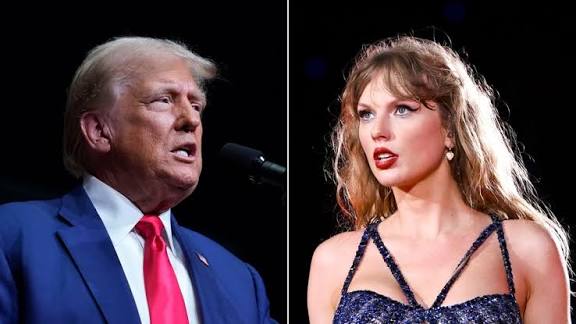
In a dramatic and highly charged intervention into American politics, global music icon Taylor Swift has accused former President Donald Trump of working relentlessly to fracture the long-standing alliance between the United States and Europe, including the stability of NATO. Her remarks have ignited intense debate across political, diplomatic, and cultural circles, underscoring how deeply concerns about America’s global role now resonate beyond Washington.
“This Is Bigger Than Politics”
According to Swift, the issue is not about party loyalty or election cycles, but about the future of international cooperation that has underpinned global security for decades. She warned that repeated attacks on NATO, dismissive rhetoric toward European allies, and an “America-first-at-all-costs” posture risk doing irreversible damage to relationships built since World War II.
“This is bigger than politics or personalities,” Swift reportedly emphasized. “When alliances fracture, the consequences are felt by ordinary people — economically, diplomatically, and in matters of peace and security.”
A Rare Call to the Highest Institutions
What has shocked many observers is not only Swift’s criticism of Trump, but her direct appeal to the Supreme Court and Congress. She urged lawmakers and justices to act as institutional guardrails, stepping in to protect U.S. democratic norms and international commitments before lasting harm is done.
Her statement framed the issue as a constitutional and moral responsibility, arguing that no single leader should be allowed to unilaterally weaken alliances that generations of Americans helped build and defend.
Trump’s NATO Record Under Scrutiny
During his presidency, Trump repeatedly criticized NATO allies for failing to meet defense spending targets, questioned the value of the alliance, and at times suggested the U.S. might not defend certain member states. Supporters praised his hardline stance as tough negotiation; critics warned it emboldened adversaries and shook allied confidence.
Swift’s comments revive that debate at a moment when global tensions — from Eastern Europe to the Middle East — have made alliance unity more critical than ever.
Celebrity Voices and Political Power
Swift’s entry into this debate highlights a broader trend: celebrities using their platforms to influence political discourse. With a massive global following, her words carry weight far beyond traditional political commentary. Supporters argue she is exercising responsible citizenship; critics accuse her of overstepping into areas better left to elected officials.
Regardless of where one stands, her remarks have undeniably amplified public scrutiny of U.S. foreign policy and institutional checks and balances.
A Nation at a Crossroads
At its core, Swift’s warning reflects a deeper anxiety shared by many Americans and allies abroad: Is the United States still a reliable partner on the world stage? And if democratic institutions fail to act, can damaged alliances ever be fully repaired?
As reactions pour in from lawmakers, commentators, and international observers, one thing is clear — this controversy is no longer confined to political insiders. It has entered mainstream culture, where the stakes are framed not just in policy terms, but in values, trust, and the future of global cooperation.
Whether Congress or the Supreme Court responds in any tangible way remains uncertain. But Swift’s message has already landed: the cost of inaction, she warns, may be far greater than the cost of political confrontation.


VIRAL: BREAKS THE INTERNET WITH DARING FASHION MOMENT — FANS CAN’T STOP TALKING!

Secret double life of Kristi Noem’s cross-dressing husband Bryon: The pouting ‘busty bimbo’ photos and trove of explicit messages

Internet Buzz: 10 Private Photos of Serena Williams Allegedly Leaked Online, Click here to see more pictures

“Beyoncé Goes Viral Over Priceless Reaction to Party Confrontation” between Usher Raymond and Justin Bieber.

WWE Star Sasha Banks Breaks Her Silence: The Real Reason Behind Her WWE Exit

Beloved young dad and inspiring female ‘Air Force superstar’ among US heroes killed in Iran mission crash as all six are named

Kylie Jenner Stuns in Topless Vanity Fair Shoot, Opens Up About Love with Timothée Chalamet and Desire for More Kids

“Over 300 Days Into His Second Term: How Is Donald Trump Really Doing?”

How Israel lured Ayatollah to his doom… then blew him up with a missile from space

Megan Fox Sets Instagram Ablaze With Sultry New Photos That Have Fans Weak at the Knees

Tucker Carlson Torches Trump’s Iran Strike as “Disgusting and Evil,” Exposing Deep Cracks in the MAGA Base
